Table of Contents
Des Moines gets an average of 35 inches of snow a year, and much of it falls as a heavy, wet snowpack that clings to rooftops until a sudden warm spell sends it sliding all at once.
If you have rooftop solar, that thaw cycle raises an important question: do solar panels need snow guards to keep that snowpack from dumping onto your walkway, deck, or gutters below?
For most homes here, solar panel snow guards are worth having, and the reason has more to do with your roof pitch and panel layout than the panels themselves.
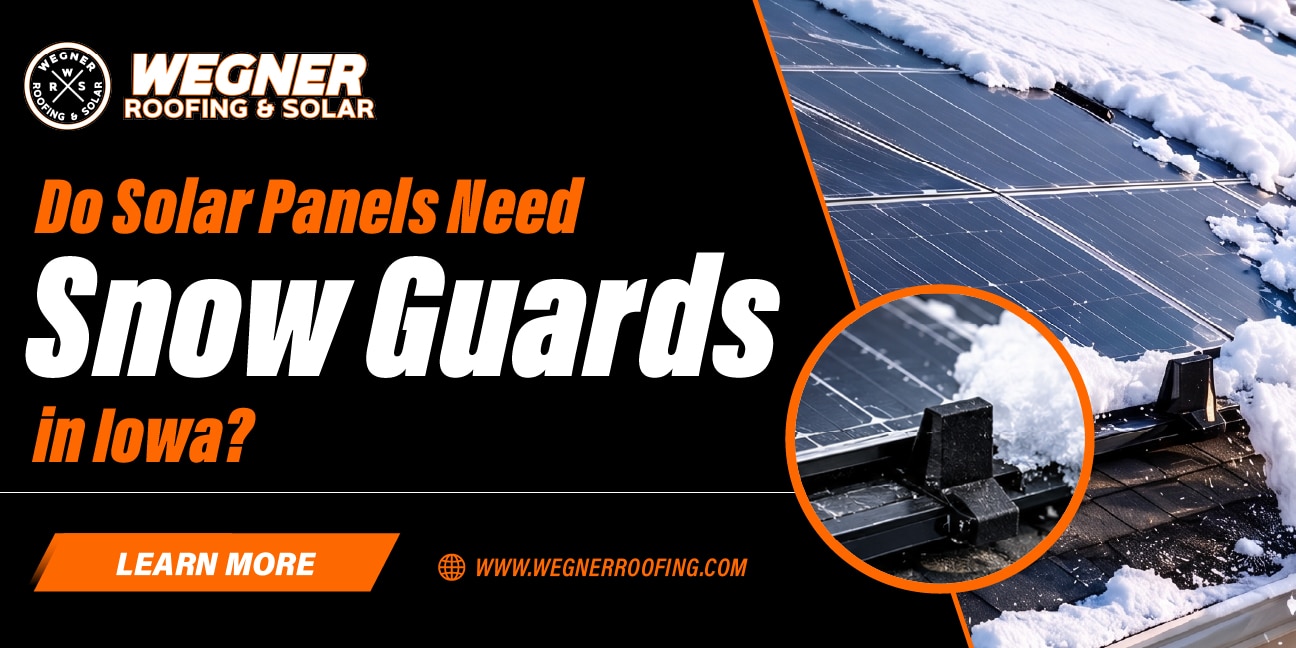
Solar panels absorb sunlight and generate heat under the glass surface, even on cold days. That warmth melts the bottom layer of snow sitting directly on the panels, creating a thin water layer that lets the entire snowpack release at once instead of melting gradually like it would on bare shingles.
This is exactly why solar panel snow guards exist and why so many Des Moines homeowners end up asking about them after their first heavy winter.
Why Des Moines Winters Create a Sliding Snow Problem for Solar Arrays
Central Iowa’s freeze-thaw pattern contributes to the problem. Temperatures swing above freezing during the day and drop below freezing at night, repeatedly softening and refreezing snow sitting on a warm solar array.
Steep-slope homes common in neighborhoods like Beaverdale and Waveland Park make this worse.
A 30 to 45 degree roof pitch gives melting snow very little to grip once it starts moving, so a foot of accumulation can release in seconds rather than sliding off in small, harmless amounts.
A few factors that increase the risk on any given home:
- Roof pitch of 6/12 or steeper, which speeds up snow release
- South or west-facing panels, which absorb more direct sun and heat up faster
- Multiple freeze-thaw cycles in a single week, common in January and February
- Panels installed close to the roof edge, giving snow less distance to slow down before releasing.
The Real Risks of Uncontrolled Solar Snow Slides
When snow releases from slick solar panels, it doesn’t drift down gradually; it drops in 20- to 40-pound compacted sheets.
Standard residential gutters are engineered to handle free-flowing rainwater, not hundreds of pounds of sudden dynamic impact.
In the Des Moines metro, winter service calls after a sudden thaw typically involve:
- Gutter failure: Bent aprons, torn hidden hangers, and sections pulled completely away from the drip edge.
- Fascia and roof wear: Cracked fascia boards, stripped shingle granules, and compromised underlayment where the falling ice repeatedly scuffs the lower roof line.
- Ground-level hazards: Crushed AC condensers, broken patio furniture, flattened landscaping, and serious safety risks directly above walkways or entry doors.
Do Solar Panels Need Snow Guards? Here's How to Tell
Not every Des Moines solar installation needs guards, but most steep-slope homes with panels mounted above a walkway, entry, deck, or gutter line benefit from solar panels’ snow guard protection.
A few signs point toward yes:
- Your roof pitch is 6/12 or steeper.
- Panels sit directly above a gutter, door, or high-traffic area.
- You have already noticed gutter damage or ice buildup near the panel edge.
- Your system’s snow load rating wasn’t evaluated for sliding dynamic force during installation.
- You’ve seen large sheets of snow release suddenly after a warm afternoon.
If any of these apply, a quick inspection can confirm whether solar panel snow guards make sense for your specific array.

If you’re weighing whether your home is even a good candidate for panels this season, our 2026 Des Moines, IA Home Solar Guide breaks down local sun exposure, incentives, and roof compatibility before you commit.
Snow Guard Cost for a Des Moines Solar Array in 2026
Snow guard cost for a typical residential array in the Des Moines area runs between $1000 and $3500 in 2026, depending on how many panel rows need coverage and whether the guards mount to the racking or the roof surface itself. Larger arrays covering a full south-facing slope sit toward the higher end of that range.
Pricing generally depends on:
- Number of panel rows requiring coverage
- Mounting method (racking-attached vs. roof-surface-attached)
- Roof pitch and accessibility for installers
- Whether guards are added during install or retrofitted later
This is a modest investment compared to repairing a crushed gutter run or replacing shingles damaged by repeated snow impact, which can run into the thousands depending on the extent of the damage.
If you’re noticing ice buildup or gutter strain near your panels this winter, it’s worth having a local team take a look before the next thaw cycle hits.
Wegner Roofing and Solar can evaluate your specific setup and tell you honestly whether solar panels need snow guards on your roof.
Are Snow Guards Installed With the Array or After?
Snow guards can be installed either with the array or after, and both approaches work well when done correctly.
Installing them during the original setup allows the installer to plan guard placement around panel rows and racking rails from the start, which typically results in a cleaner, more integrated look.
Retrofitting guards onto an existing solar array is just as common, especially once a homeowner sees firsthand how their roof pitch and panel layout behave in winter.
The guards attach to the racking system or roof surface without needing to remove the Solar Panel units themselves in most cases.
How Wegner Roofing and Solar Protects Your Investment Year-Round
We have installed and serviced solar panel snow guard systems across the Des Moines metro long enough to know which roof pitches and panel layouts consistently need extra winter protection.
As a locally based, family-owned team, we look at the whole system- roof, racking, gutters, and panels- rather than treating solar as separate from the roof it sits on.
Here’s what our inspection process typically covers:
- Roof pitch and orientation assessment
- Existing racking hardware compatibility check
- Gutter and fascia condition below the array
- Recommendation on guard type and placement, if needed
That whole-system view matters because a snow guard that is not matched to your specific racking hardware can loosen or underperform within a season or two.
Key Takeaways
Steep-pitch Des Moines roofs with rooftop solar are prone to sudden snow release due to panel warmth and freeze-thaw cycles.
Sliding snow can damage gutters, fascia, and shingles below the array, leading to costly repairs over time.
Solar panel snow guards typically cost $1000 to $3500 in 2026, far less than repairing sliding snow damage.
Guards can be added during initial installation or retrofitted later without major disruption to your existing system.
Protecting Your Iowa Solar Investment Year-Round
Rooftop solar is a major investment in your home, and Iowa’s rapid freeze-thaw cycles shouldn’t come at the expense of your gutters, fascia, or lower shingles.
While not every layout requires extra hardware, homes with steep pitches or panels positioned over walkways and entry points face real risks once wet snow begins to slide.
Snow guards provide a reliable, low-profile barrier that holds accumulation in place so it can melt gradually rather than dumping in heavy sheets.
Whether installed alongside a new build or retrofitted onto an existing array, it’s a simple upgrade that prevents thousands of dollars in winter impact damage.
Not sure if your home fits the profile for snow guards?
Reach out to Wegner Roofing and Solar, and we’ll walk your roof with you, explain what we see, and recommend only what actually makes sense for your array.

FAQs About Solar Panels in Iowa
Do solar panels need snow guards?
Yes, many solar panels need snow guards, especially on steep roofs. Panels generate surface heat that melts the bottom snow layer, creating a slick surface that triggers sudden avalanches. Adding guards protects walkways, entries, and gutters below from heavy, dangerous slides.
Can sliding snow damage gutters below solar panels?
Yes, sliding snow from solar panels damages gutters by exerting sudden, heavy pressure on systems designed solely for rain. This impact repeatedly bends aprons, loosens hangers, and harms fascia. Homeowners in Des Moines frequently see this damage after rapid winter thaws.
Are snow guards installed with the array or after?
Snow guards can be installed during initial solar setup or retrofitted later, and both approaches work effectively. Early installation integrates cleanly with racking, while retrofits solve issues identified after winter. Crucially, neither method typically requires removing the solar panels themselves.
Table of Contents
Solar Cash-Back and Zero-Down Options: Des Moines Table of Contents Des Moines homeowners know Iowa weather does not do things halfway. Between humid summer afternoons
Solar Panel Snow Removal in Des Moines, IA Table of Contents When an Alberta Clipper dumps four inches of powder across Polk County overnight, your
Do Solar Panels Need Snow Guards in Iowa? Table of Contents Des Moines gets an average of 35 inches of snow a year, and much
Solar Panel Payback Period in Des Moines, IA Table of Contents Des Moines homeowners get roughly 199 sunny days a year, and winters are cold
Metal Roof vs Asphalt Shingles on an Eastern Iowa Home: Cost Over 30 Years Table of Contents If you’re comparing metal roof cost vs shingles