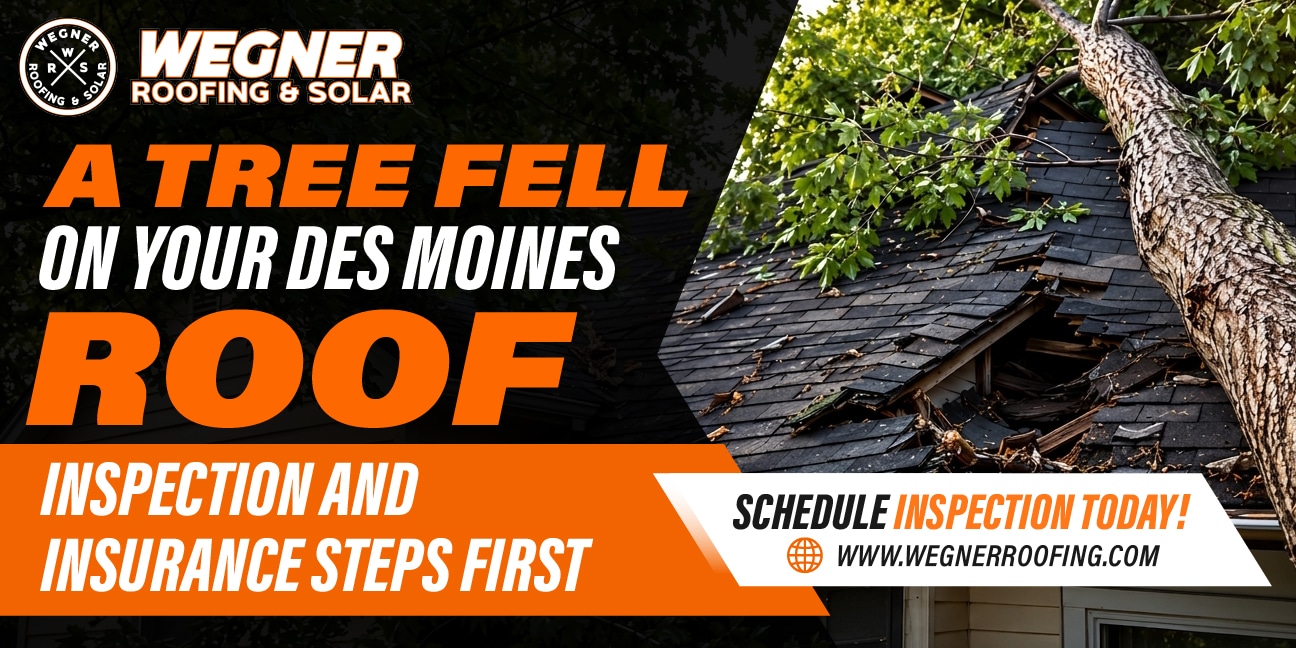
A Tree Fell on Your Des Moines Roof: Inspection and Insurance Steps First
Table of Contents
Des Moines sits inside a wind corridor that turns the mature oaks along Drake University’s tree-lined streets and the leafy lots of Waukee and Clive into real hazards once a derecho-strength gust rolls through Central Iowa.
When a tree falls on your roof during one of these storm cells, the crash itself is only the beginning of what you’re now dealing with.
The moment a tree crashes into your roof, your priorities narrow to three things: get everyone away from the damaged room, stop water from reaching the attic, and start documenting before anything gets moved.
A local crew can typically reach a Des Moines-metro address and have a tarp secured within hours, not days, which matters more than most homeowners realize once rain follows the same storm cell.
A Tree Has Fallen on Your Roof: Here's What Happens in the First Hour
Once you know a tree has fallen on your roof, resist the urge to inspect it yourself from a ladder. Wet, debris-covered shingles are unstable, and roofing injuries spike immediately after storm events for exactly this reason.
Instead, focus on:
- Moving family members and pets out of any room directly beneath the impact point.
- Shutting off electricity to light fixtures or outlets near visible water intrusion.
- Placing buckets under active drips and photographing the interior in real time.
- Calling a licensed local crew for emergency tarping after tree fall impact, since a household tarp and duct tape won’t hold under sustained Iowa wind.
For the fuller nighttime walkthrough, our guide on emergency roofing in Des Moines covers exactly what to do if the impact happens after hours and a crew is still en route.
Don’t wait until morning if a tree falls on your roof and water is actively entering. Mold colonization can begin within 24 to 48 hours in warm, humid conditions, and every extra hour a limb sits on your decking increases the odds that a repair will turn into a full section replacement.
If a tree falls on your roof right now, stop reading and call Wegner Roofing & Solar’s 24/7 line. A local Central Iowa crew, not a distant call center, gets dispatched to your address the same day.
Reading the Damage: What a Fallen Limb Actually Does to Iowa Roofing
Not every tree strike looks the same from the ground, and that’s exactly the problem. A tree might fall on your roof and punch clean through the decking in one spot, or it may have simply cracked shingles and bruised the mat underneath without an obvious hole.
Signs that point to serious structural damage from falling limb impact include:
- A visibly sagging or dipped roofline near the impact point
- Daylight visible through the attic decking
- Cracked or splintered rafters seen from inside the attic
- Exterior walls that have shifted or separated slightly from the roofline

Building Your Insurance Paper Trail Before the Adjuster Arrives
When a tree falls on your roof during a documented storm event, most Iowa homeowner policies treat it as a covered peril, but only if the damage is properly recorded from the start.
Start documenting tree damage for adjuster review before any debris gets cleared:
- Timestamped photos of the tree, the point of impact, and interior damage
- The approximate time the tree fell on your roof, tied to the storm or wind event.
- Notes on which rooms were affected and any temporary measures taken
- Contact info for the roofing crew that responded, since their report becomes part of your file.
Iowa policies generally require notice within about 30 days of the event, so timing matters as much as thoroughness.
A question we hear constantly: who pays for tree removal insurance typically depends heavily on whether the tree caused covered structural damage versus simply falling in the yard, so this is worth reviewing with your adjuster directly.
Our storm damage roof repair page breaks down the full claims process, from first tarp to final settlement.
Don’t navigate a tree-strike claim alone. Wegner Roofing & Solar meets your adjuster on-site and makes sure nothing legitimate gets undervalued.
When Neighbor Trees Cross Property Lines
A surprising number of property damage calls in Des Moines involve a neighbor’s tree falling on a home, rather than a tree from the owner’s yard.
In Iowa, whose insurance pays generally depends on which tree fell and whether it showed prior signs of disease or instability, a detail an adjuster will ask about directly.
Either way, the roof repair process itself doesn’t change. Documentation, tarping, and a professional inspection matter just as much whether the tree fell on your roof from your own yard or your neighbor’s.
Repair, Shore, or Replace: What Comes After the Tarp
Once the tarp is holding and your claim is moving, the real question becomes scope. A tree has fallen on your roof, but that doesn’t automatically mean a full replacement.
- Isolated damage: Cracked shingles or a small deck puncture usually calls for a targeted repair.
- Moderate structural concern: Exposed or cracked rafters may need temporary shoring to stabilize the roofline before permanent work begins.
- Widespread damage: A large impact zone, an older roof, or an approved full claim often points toward replacement.
A written estimate before permanent work starts keeps you from guessing mid-repair, and it gives your adjuster a clear line-item scope to approve against.
Key Takeaways
Get people and pets away from the impact area immediately if a tree falls on your roof.
Call for professional emergency tarping rather than a DIY tarp-and-tape fix.
Photograph everything before debris is cleared to strengthen your insurance claim.
A free professional inspection reveals hidden structural damage a ground-level look misses.
Whether the tree was yours or a neighbor’s, the repair and documentation steps stay the same.
Don't Let a Fallen Tree Turn Into a Bigger Problem
The tree falling on your roof is a one-time event, but a slow response can let the damage multiply, causing saturated insulation, sagging drywall, and a claim that’s harder to document days later.
Acting within the first few hours, not days, is what separates a contained repair from a costly rebuild. Central Iowa homeowners who call a local, GAF-certified crew immediately after impact consistently end up with faster claim approvals and fewer surprise costs down the line.
You can see how Des Moines neighbors describe their own experience on Wegner Roofing & Solar’s Google Business Profile, where real customers share what the process actually looked like for them.
Call Wegner Roofing & Solar in Des Moines, IA, now for a same-day tarp and a free, documented inspection your insurer will respect.

FAQs About Fallen Trees in Des Moines, IA
Does insurance cover removing the tree as well as the repair?
Often, yes, but coverage typically splits into two parts: roof repair is usually covered outright, while tree removal coverage depends on whether the tree caused direct structural damage. Review your declarations page and confirm details with your adjuster.
Should I tarp it myself or wait for the roofer?
Wait for a professional whenever possible. Climbing a wet, debris-covered roof is dangerous, and a licensed crew can secure a commercial-grade tarp correctly within hours, holding far longer than a DIY hardware-store tarp in Iowa wind.
How do I know if the structure is unsafe to stay in?
Visible sagging, daylight through the attic decking, cracked rafters, or shifted exterior walls all signal an unsafe structure. If you notice any of these signs, leave the affected area immediately and call a professional for an on-site safety assessment.
Table of Contents
Solar Cash-Back and Zero-Down Options: Des Moines Table of Contents Des Moines homeowners know Iowa weather does not do things halfway. Between humid summer afternoons
Solar Panel Snow Removal in Des Moines, IA Table of Contents When an Alberta Clipper dumps four inches of powder across Polk County overnight, your
Do Solar Panels Need Snow Guards in Iowa? Table of Contents Des Moines gets an average of 35 inches of snow a year, and much
Solar Panel Payback Period in Des Moines, IA Table of Contents Des Moines homeowners get roughly 199 sunny days a year, and winters are cold
Metal Roof vs Asphalt Shingles on an Eastern Iowa Home: Cost Over 30 Years Table of Contents If you’re comparing metal roof cost vs shingles